The Bhramar Geet, described in Shrimad Bhagavatam 10.47.12–21, is one of the five celebrated songs of divine love in the Bhagavatam, along with the Venu Geet, Yugal Geet, Pranaya Geet, and Gopi Geet. Among all expressions of Bhakti, it is revered by saints and Acharyas as one of the loftiest revelations of viraha-prem, the divine love experienced in separation from Bhagwan Krishna.
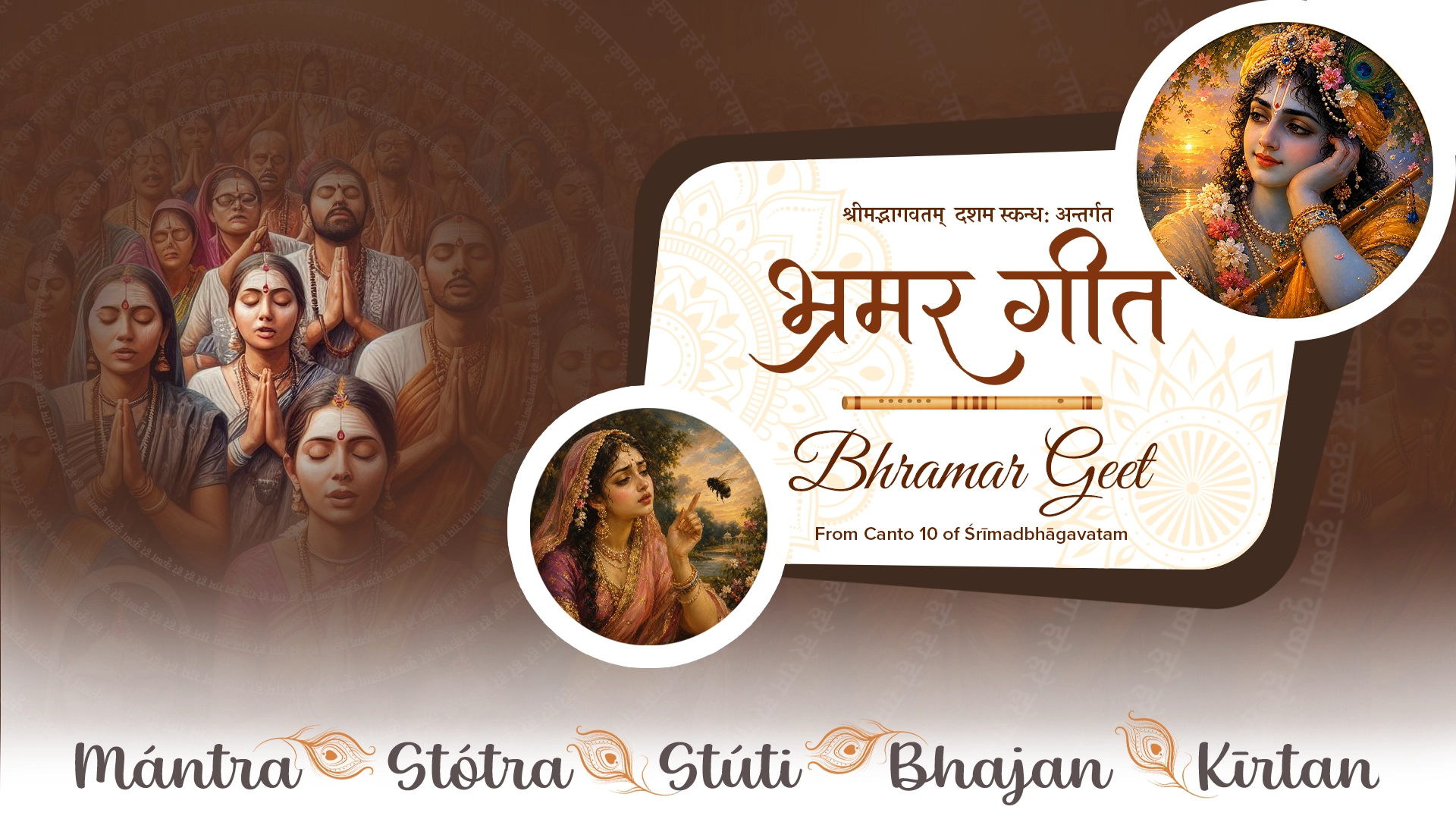
When Uddhav arrives in Braj carrying Krishna’s message, the Gopis become immersed in intense remembrance of His divine form, sweet pastimes, loving words, and enchanting nature. At that moment, a black bumblebee begins hovering nearby. Seeing it, a foremost Gopi, whom later Bhakti traditions identify as Radha, enters a state of divyonmad, divine transcendental absorption born from the fire of separation.
Mistaking the bee to be Krishna’s messenger, she begins speaking to it with overflowing emotions of love, maan (loving displeasure), longing, jealousy, surrender, pain, and unbroken devotion. Externally, her words appear like complaints against Krishna, but internally, every syllable is saturated with the highest prem. In the path of Bhakti, separation from Bhagwan does not diminish love; rather, it intensifies remembrance and makes the heart completely one-pointed toward Him.
Thus, the Bhramar Geet is not merely a poetic dialogue, but a profound revelation of Mahabhav, the highest state of divine love, where every thought, emotion, and breath becomes fully absorbed in Bhagwan Shree Krishna.
गोप्युवाच।
मधुप कितवबन्धो मा स्पृशङ्घ्रिं सपत्न्याः।
कुचविलुलितमालाकुङ्कुमश्मश्रुभिर्नः।
वहतु मधुपतिस्तन्मानिनीनां प्रसादं।
यदुसदसि विडम्ब्यं यस्य दूतस्त्वमीदृक् १२।
gopyuvācha madhupa kitava-bandho mā spṛiśhaṅghriṁ sapatnyāḥ kucha-vilulita-mālā-kuṅkuma-śhmaśhrubhir naḥ
vahatu madhupatiśh tan-māninīnāṁ prasādaṁ
yadu-sadasi viḍambyaṁ yasya dūtastvam īdṛik 12
गोपी ने कहा:
"हे भौंरे! तू उस छलिया (कृष्ण) का मित्र है, इसलिए हमारे चरणों को स्पर्श मत कर! तेरी मूँछों पर उस केसर का रंग लगा हुआ है, जो हमारे प्रतिद्वंदियों (मथुरा की स्त्रियों) के वक्षस्थल पर लगी माला से यहाँ आया है। तुम्हारे मधुपति (कृष्ण) उन मानिनी स्त्रियों को ही अपनी प्रसन्नता और कृपा प्रदान करें। यदुवंशियों की सभा में वैसे ही उनकी बड़ी हँसी उड़ रही है, क्योंकि तुम जैसे कपटी जीव उनके दूत बनकर घूम रहे हो!"
The Gopi said:
"O bee! You're a friend of a cheater, do not dare touch my feet! Your moustache is stained with the saffron powder from the flower garland that was crushed against the breasts of our rivals during your master's secret rendezvous. Let your Master of Madhu (Krishna) keep His favours for those proud women of Mathura. He is already a laughingstock in the assembly of the Yadus, and you, acting as such a deceitful messenger for Him, only prove it!"
सकृदधरसुधां स्वां मोहिनीं पाययित्वा।
सुमनस इव सद्यस्तत्यजेऽस्मान्भवादृक्।
परिचरति कथं तत्पादपद्मं नु पद्मा।
ह्यपि बत हृतचेता ह्युत्तमःश्लोकजल्पैः १३।
sakṛid-adhara-sudhāṁ svāṁ mohinīṁ pāyayitvā
sumanasa iva sadyas tatyaje'smān bhavādṛik
paricharati kathaṁ tat-pāda-padmaṁ nu padmā
hyapi bata hṛita-chetā hyuttamaḥ-śloka-jalpaiḥ 13
"हे भ्रमर! तुम्हारे जैसे कपटी कृष्ण ने हमें अपनी उस अत्यंत मनमोहक अधर-सुधा (होठों के अमृत) का एक ही बार पान कराया और फिर हमें वैसे ही अचानक छोड़ दिया, जैसे कोई भौंरा सुंदर फूलों का रस चूसकर उन्हें तुरंत त्याग देता है। मुझे तो इस बात पर बड़ा आश्चर्य होता है कि स्वयं साक्षात् लक्ष्मी जी उनके उन चरण-कमलों की सेवा कैसे करती रहती हैं? निश्चित ही उत्तम कीर्ति वाले उन श्री कृष्ण की कपटभरी मीठी-मीठी बातों ने लक्ष्मी जी के चित्त को भी हर लिया है और उन्हें सम्मोहित कर दिया है।"
"O bee! Just like you, your master enticed us by allowing us to taste the enchanting nectar of His lips only once, and then suddenly abandoned us exactly as a bumblebee abandons fresh flowers after drinking their honey. I wonder, how can Devi Lakshmi continuously serve His lotus feet? Ah, alas! It must be that her heart, too, has been completely stolen and bewildered by the captivating, sweet words of Bhagwan Krishna."
किमिह बहु षडङ्घ्रे गायसि त्वं यदूनाम्।
अधिपतिमगृहाणामग्रतो नः पुराणम्।
विजयसखसखीनां गीयतां तत्प्रसङ्गः।
क्षपितकुचरुजस्ते कल्पयन्तीष्टमिष्टाः १४।
kimiha bahu ṣhaḍaṅghre gāyasi tvaṁ yadūnām
adhipatim agṛihāṇām agrato naḥ purāṇam
vijaya-sakha-sakhīnāṁ gīyatāṁ tat-prasaṅgaḥ
kṣhapita-kucha-rujas te kalpayantīṣhṭam iṣhṭāḥ 14
"ओ छह पैरों वाले भ्रमर! तुम हम जैसी बेघर (गृहहीन) गोपियों के सामने यदुवंशियों के राजा श्री कृष्ण की उस पुरानी गाथा को बार-बार यहाँ क्यों गा रहे हो? हमारा सब कुछ तो वैसे ही लुट चुका है। तुम जाकर अर्जुन के सखा (श्री कृष्ण) के इस प्रसंग को उनकी उन नई और प्यारी सखियों (मथुरा की स्त्रियों) के सामने गाओ, जिनके वक्षस्थल के संताप को उन्होंने शांत किया है। वे भाग्यशाली स्त्रियाँ तुम्हारी इस मधुर गायकी से प्रसन्न होकर तुम्हारी हर मनचाही इच्छा को अवश्य पूरा करेंगी।"
"O six-legged bee! Why do you keep singing here, over and over again, the ancient stories of the King of the Yadus (Krishna) before us, who are now completely homeless wanderers because of Him? Go instead and sing the glories of the friend of Arjun (Krishna) to His new, beloved companions in Mathura, whose heartaches He has so recently cured. Those fortunate women will be deeply pleased with you and will fulfil all your heart's desires."
दिवि भुवि च रसायां काः स्त्रियस्तद्दुरापाः।
कपटरुचिरहासभ्रूविजृम्भस्य याः स्युः।
चरणरज उपास्ते यस्य भूतिर्वयं का।
अपि च कृपणपक्षे ह्युत्तमश्लोकशब्दः १५।
divi bhuvi cha rasāyāṁ kāḥ striyas tad-durāpāḥ
kapaṭa-ruchira-hāsa-bhrū-vijṛimbhasya yāḥ syuḥ
charaṇa-raja upāste yasya bhūtir vayaṁ kā
api cha kṛipaṇa-pakṣhe hyuttama-śloka-śhabdaḥ 15
"हे भ्रमर! स्वर्गलोक में, पृथ्वी पर या पाताललोक में ऐसी कौन सी स्त्री होगी, जो श्री कृष्ण के लिए दुर्लभ हो? उनकी वह कपटभरी मनोहारिणी मुस्कान और भृकुटी-विलास (भौंहों का मटकाना) ऐसा है कि कोई भी नारी उन पर मोहित हुए बिना नहीं रह सकती। स्वयं साक्षात् महालक्ष्मी जी, जिनकी कृपा पाने के लिए सारा संसार तरसता है, वे भी निरंतर उनके चरणों की धूलि की सेवा करती रहती हैं। उनके सामने हम साधारण वनवासिनी गोपियाँ भला क्या चीज़ हैं? हमारा कोई अस्तित्व नहीं है। परंतु फिर भी, सत्य तो यही है कि वे 'उत्तमश्लोक' (परम यशस्वी) कहलाते हैं, क्योंकि उनका यह पावन नाम केवल दीन-हीन और असहायों पर असीम दया करने के लिए ही प्रसिद्ध है।"
"O bee! In heaven, on earth, or in the lower worlds, what woman is there who is unattainable for Him? Who could possibly resist the enchanting bewilderment of His deceptive, beautiful smile and the playful arching of His eyebrows? Even Devi Lakshmi, whose favour everyone else begs for, worships the dust of His lotus feet. Compared to her, what are we, simple village Gopis? We are nothing. And yet, it is an absolute truth that His title is 'Uttamashloka' (The Supreme One praised by exalted hymns), because His glorious name shines brightest when He shows mercy to the most wretched and helpless ones like us."
विसृज शिरसि पादं वेद्म्यहं चाटुकारैर्।
अनुनयविदुषस्तेऽभ्येत्य दौत्यैर्मुकुन्दात्।
स्वकृत इह विसृष्टापत्यपत्यन्यलोका।
व्यसृजदकृतचेताः किं नु सन्धेयमस्मिन् १६।
visṛija śhirasi pādaṁ vedmyahaṁ chāṭukārair
anunaya-viduṣhas te'bhyetya dautyair mukundāt
sva-kṛita iha visṛiṣhṭāpatya-paty-anya-lokā
vyasṛijad akṛita-chetāḥ kiṁ nu sandheyam asmin 16
"अरे ओ भ्रमर! मेरे पैरों पर अपना सिर रखना बंद करो और यहाँ से हट जाओ! मैं तुम्हारी इन चापलूसी भरी मीठी-मीठी बातों को बहुत अच्छे से जानती हूँ। तुम उस मुकुन्द (कृष्ण) से अनुनय-विनय करने की कला और चाटुकारिता सीखकर ही यहाँ दूत बनकर आए हो। उस निष्ठुर कृष्ण ने हमारे साथ क्या किया? केवल उनकी खातिर हमने अपने पिताओं, पतियों, संतानों और इस लोक-परलोक की मर्यादाओं को पूरी तरह त्याग दिया, लेकिन उस कृतघ्न (अकृतचेताः) ने हमें इतनी आसानी से छोड़ दिया! तुम ही बताओ, ऐसे हृदयहीन और छलिए व्यक्ति के साथ अब हमारा क्या मेल-मिलाप या संधि हो सकती है?"
"O bee! Take your head off my feet and leave! I know you well; you have come here as a messenger from Mukund, having been thoroughly trained by Him in the art of flattering and sweet-talking. For His sake alone, we abandoned our children, husbands, families, and all social and religious duties. Yet, He was so heartless that He abandoned us without a second thought! Tell me, how can there ever be any reconciliation or treaty with such an ungrateful person?"
मृगयुरिव कपीन्द्रं विव्यधे लुब्धधर्मा।
स्त्रियमकृत विरूपां स्त्रीजितः कामयानाम्।
बलिमपि बलिमत्त्वावेष्टयद्ध्वाङ्क्षवद्यस्।
तदलमसितसख्यैर्दुस्त्यजस्तत्कथार्थः १७।
mṛigayur iva kapīndraṁ vivyadhe lubdha-dharmā
striyam akṛita virūpāṁ strī-jitaḥ kāmayānām
balim api balimattvāveṣhṭayaddhvāṅkṣhavad yas
tad alam asita-sakhyair dustyajas tat-kathārthaḥ 17
"अरे ओ काले भ्रमर! उस सांवले कृष्ण की मित्रता की बातें अब बस रहने ही दो! वह तो अपने पिछले जन्मों में भी ऐसा ही था। त्रेतायुग में श्रीराम के रूप में उसने एक बहेलिए (शिकारी) की तरह छिपकर वानरराज बाली को तीर से मार गिराया, जो कि धर्म के विरुद्ध था। फिर अपनी पत्नी सीता के वश में होकर, उसने अपनी कामना लेकर आई शूर्पणखा के नाक-कान काटकर उसे कुरूप बना दिया। और तो और, वामन अवतार में उसने राजा बलि से भिक्षा के रूप में उनका सारा राजपाठ और सर्वस्व दान में ले लिया, और फिर एक कौए की तरह सारा भोग खाकर, उल्टा बलि को ही वरुण-पाश से बाँध दिया! इसलिए, उस सांवले से दोस्ती करना ही बेकार है... परंतु हाय! क्या करें? उसकी लीलाओं की कथाएँ ऐसी रसभरी हैं कि एक बार कान में पड़ जाएँ, तो उन्हें छोड़ना ही असंभव हो जाता है!"
"O black bee! Enough with talking about friendship with that dark-complexioned youth (Krishna). He has always been like this, even in His past lives! In a previous age, acting like a cruel hunter contrary to the codes of righteousness, He hid and shot the King of Monkeys, Baali. Then, completely controlled by His wife, He ruthlessly mutilated and disfigured a woman, Shurpanakha, who had approached Him with desires of love. And as the dwarf Vaman, He accepted everything King Bali offered Him as charity, but like a greedy crow, after consuming the offering, He bound Bali up with ropes! Therefore, enough with making alliances with that dark one. And yet... alas! The stories of His pastimes are so utterly sweet that once they capture the heart, it is completely impossible to give them up."
यदनुचरितलीलाकर्णपीयूषविप्रुट्।
सकृददनविधूतद्वन्द्वधर्मा विनष्टाः।
सपदि गृहकुटुम्बं दीनमुत्सृज्य दीना।
बहव इह विहङ्गा भिक्षुचर्यां चरन्ति १८।
Yad-anucharita-līlā-karṇa-pīyūṣha-vipruṭ
sakṛid-adana-vidhūta-dvandva-dharmā vinaṣhṭāḥ
sapadi gṛiha-kuṭumbaṁ dīnam utsṛijya dīnā
bahava iha vihaṅgā bhikṣhu-charyāṁ charanti 18
"हे भ्रमर! उनके पावन चरित्र और दिव्य लीलाओं की कथाएँ साक्षात् अमृत के समान हैं। उस लीलामृत की एक छोटी सी बूंद भी यदि किसी के कानों में एक बार प्रवेश कर जाए, तो वह उसके राग-द्वेष, सुख-दुःख जैसे संसार के सारे द्वन्द्वों को समूल नष्ट कर देती है। उस कथा-रस का पान करते ही मनुष्य का मन इस नाशवान संसार से ऐसा उचट जाता है कि वे तुरंत ही अपने इस दुःखी और मायावी घर-परिवार को सदा के लिए त्याग देते हैं। फिर वे स्वयं को सर्वथा दीन-हीन मानकर, आकाश में उन्मुक्त विचरने वाले पक्षियों की भाँति, केवल उस परमात्मा की खोज में संन्यासी (भिक्षुक) बनकर सर्वत्र भटकते रहते हैं।"
"O bee! The nectar of His divine pastimes and character is so potent that if a person drinks even a single drop of it through their ears just once, all their material dualities, like pleasure and pain, attraction and aversion, are instantly destroyed. Having their hearts completely stolen by that nectar, many souls immediately abandon their miserable homes and families. Becoming completely detached from worldly possessions, they wander everywhere as mendicants and ascetics, living like free birds dependent only on the Divine."
वयमृतमिव जिह्मव्याहृतं श्रद्दधानाः।
कुलिकरुतमिवाज्ञाः कृष्णवध्वो हरिण्यः।
ददृशुरसकृदेतत्तन्नखस्पर्शतीव्र।
स्मररुज उपमन्त्रिन्भण्यतामन्यवार्ता १९।
vayam ṛitam iva jihma-vyāhṛitaṁ śhraddadhānāḥ
kulika-rutam ivājñāḥ kṛiṣhṇa-vadhvo hariṇyaḥ
dadṛiśhur asakṛid etat tan-nakha-sparśha-tīvra
smara-ruja upamantrin bhaṇyatām anya-vārtā 19
"हे श्री कृष्ण के दूत! हम तो सीधे-सादे व्याध के मीठे गीत को सच मान बैठने वाली अज्ञानी हिरणियों के समान हैं। हम कृष्ण की कपटभरी और झूठी बातों को ही परम सत्य मान बैठीं, क्योंकि हम उनकी भोली-भाली सखियाँ जो थीं। उनके नखों के कोमल स्पर्श ने हमारे भीतर जो तीव्र प्रेम-पीड़ा जगाई थी, उसका फल हमने बार-बार भुगत लिया है। इसलिए हे दूत! अब हमारे सामने उस छलिए की बातें बंद करो और किसी दूसरी बात का प्रसंग छेड़ो।"
"O messenger of Krishna! We are just like innocent, foolish she-deer who trust the sweet, deceptive song of a hunter, mistaking it for reality. Being the simple companions of Krishna, we foolishly believed all His clever, untruthful words. We have already suffered repeatedly from the piercing torment of love awakened by the sharp touch of His nails. Therefore, O messenger, I beg of you enough of Him! Please speak of something else."
प्रियसख पुनरागाः प्रेयसा प्रेषितः किं।
वरय किमनुरुन्धे माननीयोऽसि मेऽङ्ग।
नयसि कथमिहास्मान्दुस्त्यजद्वन्द्वपार्श्वं।
सततमुरसि सौम्य श्रीर्वधूः साकमास्ते २०।
priyasakha punar āgāḥ preyasā preṣhitaḥ kiṁ
varaya kim anurundhe mānanīyo'si me'ṅga
nayasi katham ihāsmān dustyaja-dvandva-pārśhvaṁ
satatam urasi saumya śhrīrvadhūḥ sākam āste 20
"हे प्यारे सखा! हे सौम्य! तुम हमारे परम प्रियतम कृष्ण के द्वारा भेजे जाने पर फिर से मेरे पास लौट आए हो? आओ, तुम्हारा स्वागत है! मेरे प्यारे भाई, मुझसे मांगो, तुम्हारी क्या इच्छा है? तुम मुझसे क्या चाहते हो? तुम मेरे लिए अत्यंत पूजनीय और आदरणीय हो। परंतु मुझे एक बात बताओ की तुम हमें उस कृष्ण के पास वापस ले जाने का हठ क्यों कर रहे हो, जिसे छोड़ पाना वैसे भी हमारे लिए असंभव है? वहाँ जाकर हम क्या करेंगी? उनके वक्षस्थल (हृदय) पर तो उनकी अर्धांगिनी साक्षात् लक्ष्मी जी सदा विराजमान रहती हैं। ऐसे में हमारे लिए वहाँ कोई स्थान कहाँ है?"
"O, dear friend! O gentle one! Have you really returned to me, sent once again by my most beloved Lord? Welcome back! Please tell me what boon you desire. What can I do to please you? My dear friend, you are deeply respected and worshipped by me. But tell me, how can you think of taking us back to the side of that Lord whom it is already impossible for us to abandon? Why take us there, when His eternal consort, Goddess Lakshmi, constantly resides upon His chest, completely occupying His heart?"
अपि बत मधुपुर्यामार्यपुत्रोऽधुनास्ते।
स्मरति स पितृगेहान्सौम्य बन्धूंश्च गोपान्।
क्वचिदपि स कथा नः किङ्करीणां गृणीते।
भुजमगुरुसुगन्धं मूर्ध्न्यधास्यत्कदा नु २१।
api bata madhupuryām ārya-putro'dhunāste
smarati sa pitṛi-gehān saumya bandhūṁśh cha gopān
kvachid api sa kathā naḥ kiṅkarīṇāṁ gṛiṇīte
bhujam aguru-sugandhaṁ mūrdhny adhāsyat kadā nu 21
"हे प्यारे और सौम्य मित्र! क्या हमारे पूज्य प्राणनाथ अब भी उस मथुरापुरी में सुख से रह रहे हैं? क्या वे कभी अपने पिता नन्द बाबा के घर, अपनी मैया और अपने सखा ग्वाल-बालों को याद करते हैं? हे भ्रमर! क्या वे कभी हम जैसी अपनी तुच्छ दासियों (किङ्करीणां) की चर्चा भी करते हैं? क्या कभी ऐसा सौभाग्यशाली दिन आएगा, जब वे अपने उसी अगुरू चन्दन की दिव्य सुगंध से महकते हुए श्याम-भुज को हमारे शीश पर रखकर हमें पुनः अपनाएँगे?"
"O gentle and dear friend! Is the Lord of our hearts still residing happily in the city of Mathura? Does He ever remember His father's home, His family, and His cowherd friends? O bee, does He ever even mention the stories of us, His humble maidservants? Will that day ever come when He will place His divine arm, sweet-scented with Aguru sandalwood, upon our heads once again?"