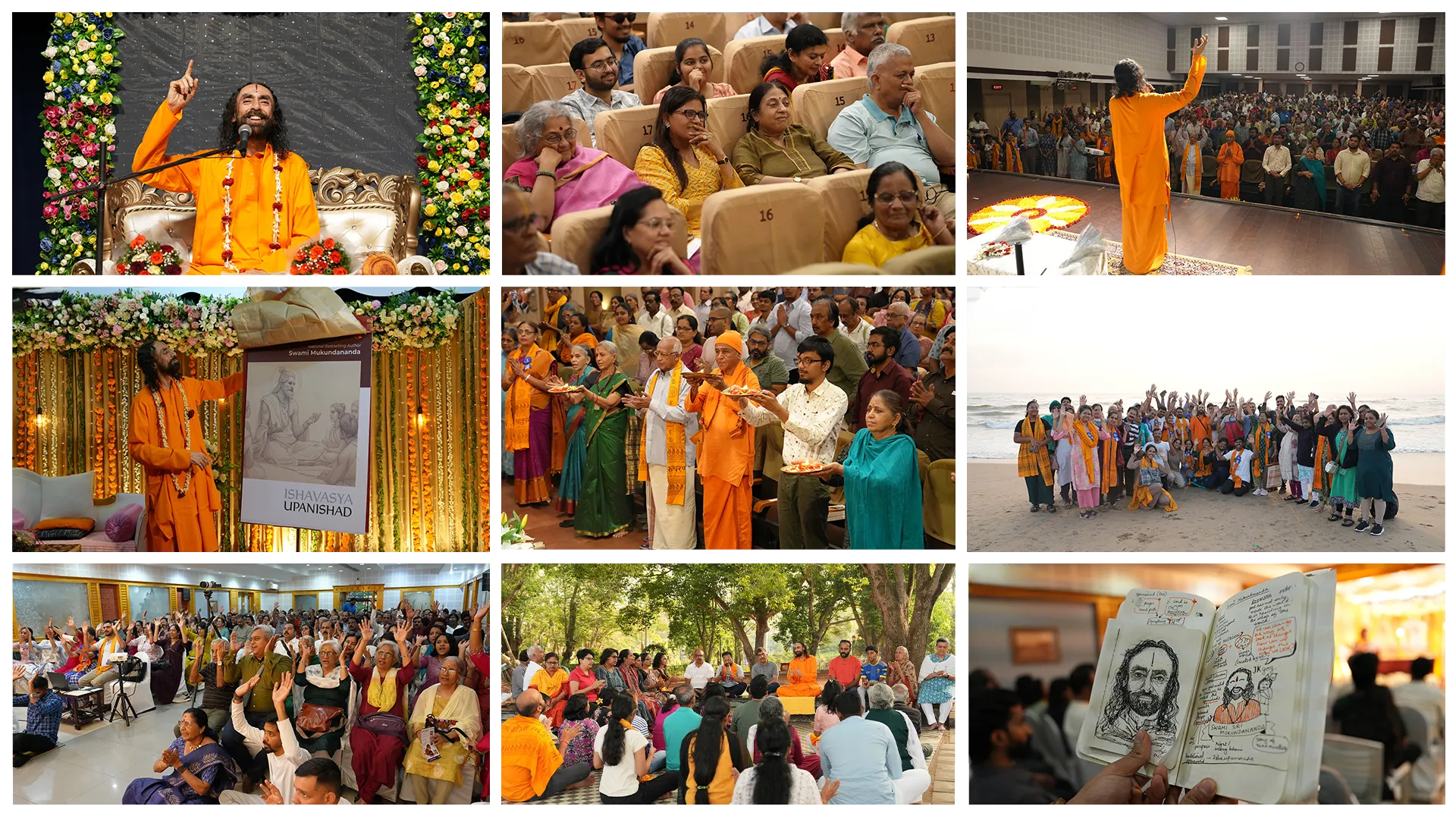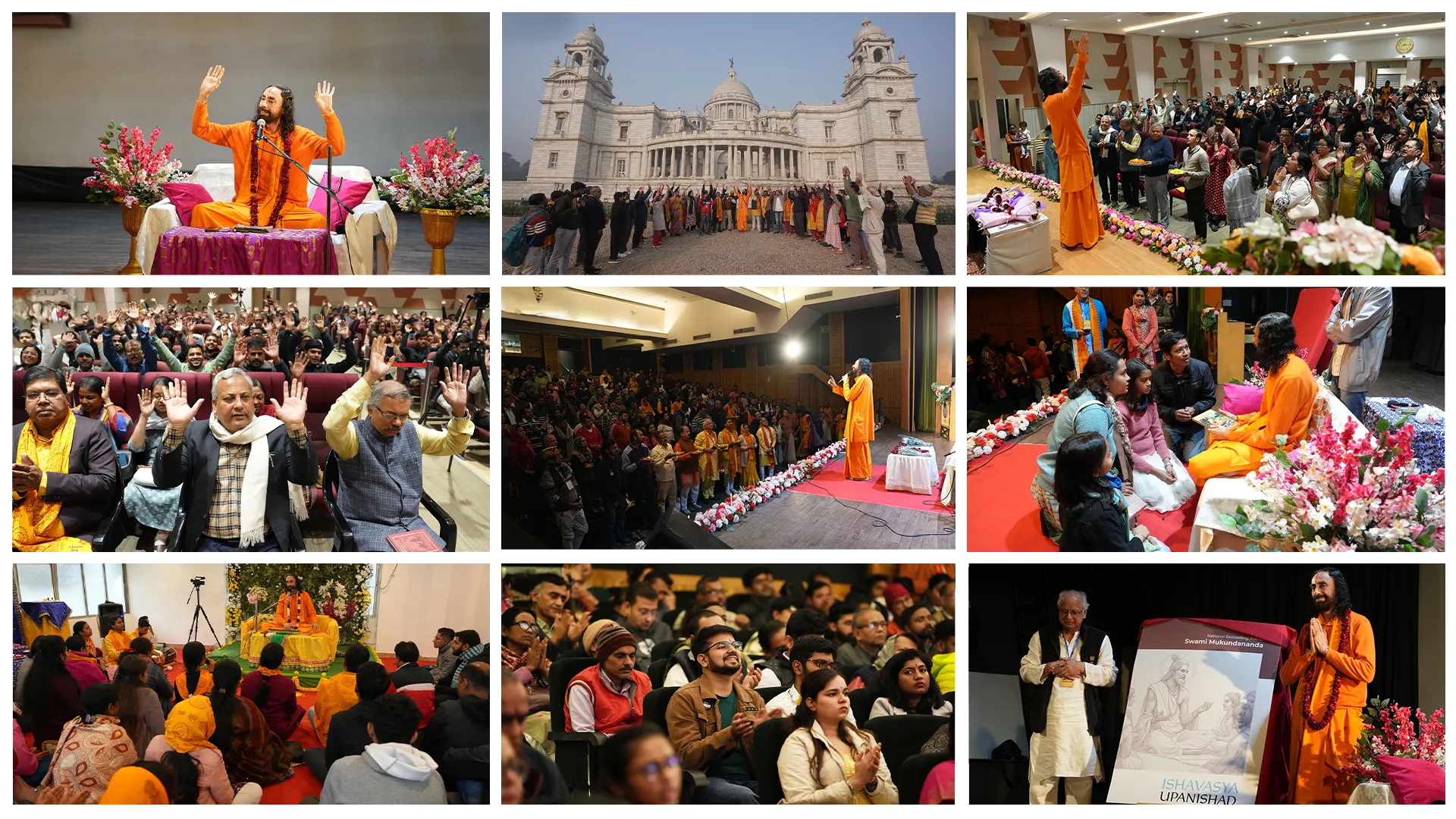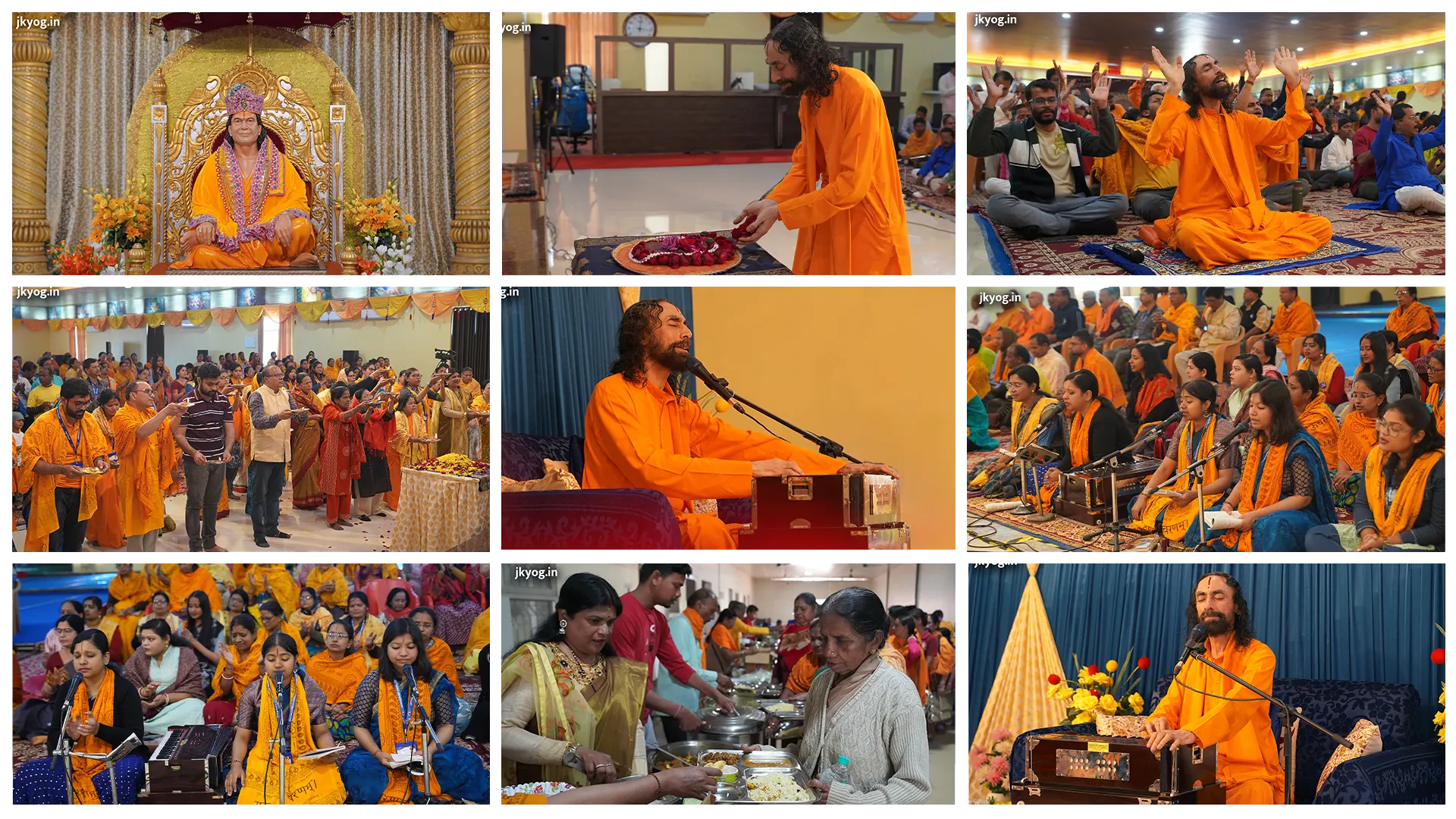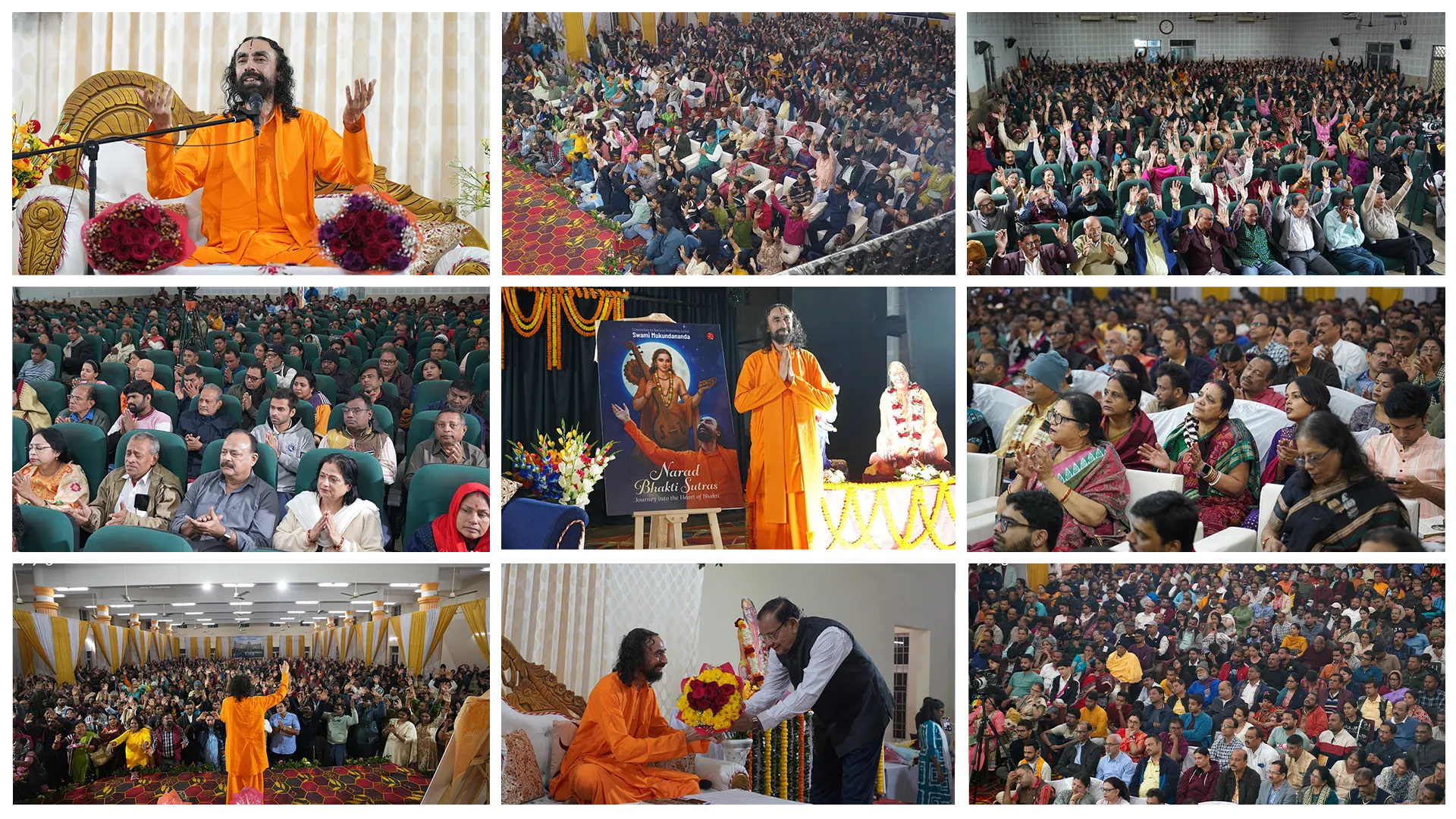
As you enter the JKYog Bhakti Ashram, the first feeling that greets you is one of quiet excitement. Flower-laden arches, colourful hangings, and the rhythmic chanting of Radhey Radhey create an atmosphere that feels both festive and sacred.
Devotees stream in steadily, their faces reflecting anticipation. At the registration counters, activity flows seamlessly, while nearby, young devotees bring a light, playful energy to the newly opened halls, reminiscent of Braj’s cowherd children entering Vrindavan.
Seva is everywhere. Carpets are being laid, decorations are being secured, and fresh flowers are being arranged for the Deities. Every action, though simple, carries a deeper offering.
Day 1: And So It Begins…
The satsang begins with Guru Vandana, followed by kirtans that gradually fill the space with devotion. Swami Mukundananda formally welcomes everyone to the 7-day Bhakti Yog Sadhana Shivir, offering chocolate prasad with warmth and simplicity. One by one, devotees bow and merge into the collective chanting of Hari Naam.
The journey has begun.
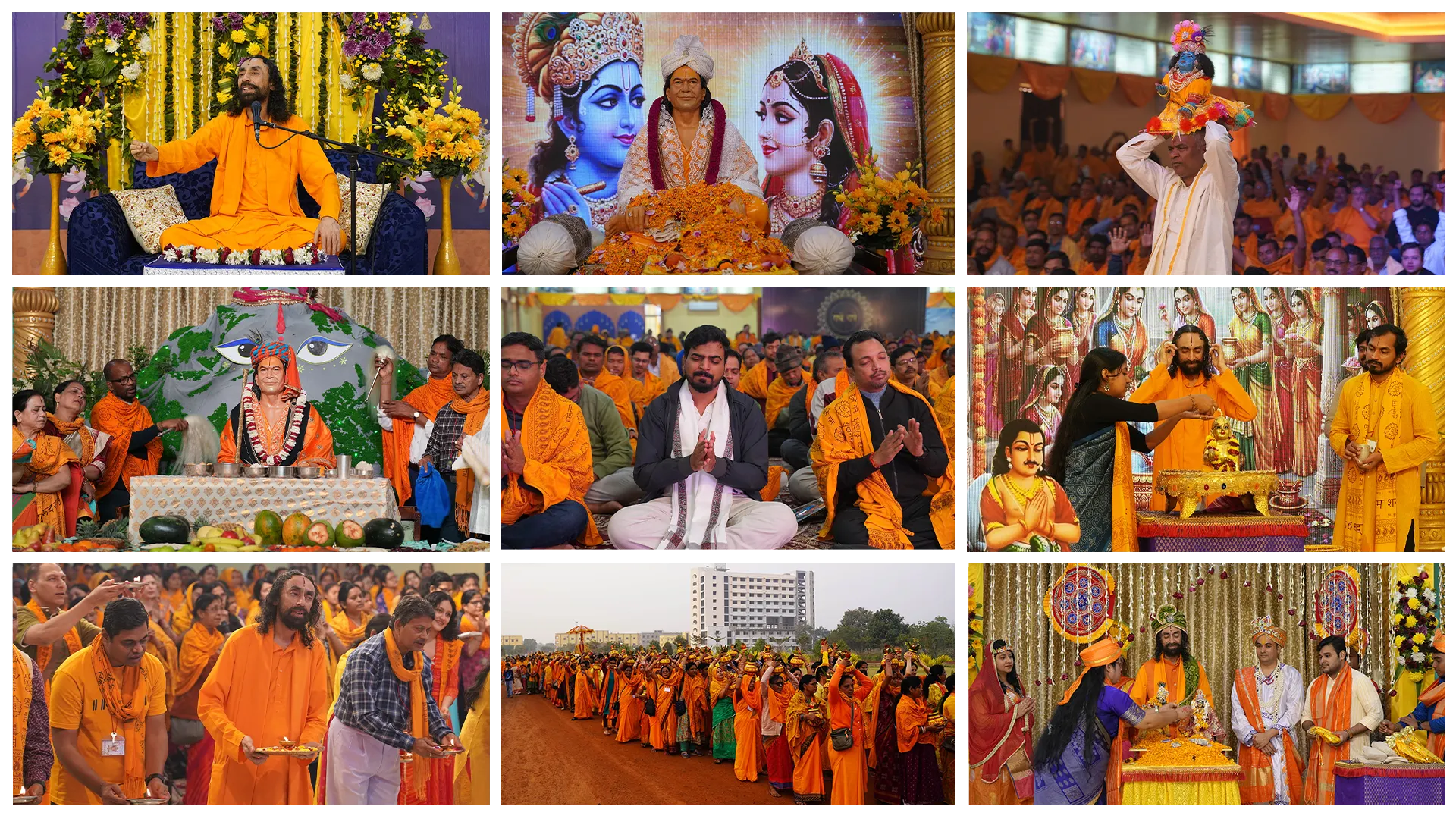
Soon after, the grand Kalash Yatra unfolds, moving through the sacred grounds of Jagadguru Kripalu University (JKU). What makes this parikrama truly unique is the coming together of Hari, Guru, and Granth; Radha-Krishna and Shree Kripaluji Maharaj, along with the Shreemad Bhagavat Granth, are carried above the heads of devotees.
Barefoot, dressed in yellow, many carry a kalash filled with sanctified holy water, chanting continuously as they walk. The bhāv is unmistakable, as if each devotee is carrying their entire world in devotion.
These kalash are later placed in the Sadhana Hall, where the Shreemad Bhagavat Katha will unfold over the next seven days. As swamiji explains, the water will absorb the divine vibrations of the Bhagavatam and be distributed as Kathamrit at the conclusion.
The evening brings a Mehfil and Bhagavat Aarti. Devotion expresses itself through song and dance, not as performance, but as offering. The day concludes with the first Bhagavat Katha and collective Hari Bol, setting the tone for the days ahead.
Day 2: From Participation to Connection
Day 2 begins with renewed enthusiasm. Morning aarti and the Radha Govind Geet gently draw the mind inward. The Prem Ras Madira kirtan introduces a deeper emotional layer in which devotees experience the sweetness of humility and the feeling of virah. Here, longing is not seen as loss, but as the natural price of divine love.
In the Bhagavat Katha, Swamiji lays the foundation through the narration of King Parikshit and Shukadevji Maharaj. The message is clear and practical: fear and attachment arise when one seeks support in the world, while true safety lies in complete sharanagati to Bhagavan.
The path of Tridhā Bhakti, shravan, kirtan, and smaran, is presented as the way forward. Parikrama fills the ashram with life. Chanting echoes through every corner, and the joy of collective devotion becomes tangible. Women devotees lovingly pull the Rath of Shree Maharajji, offering their seva with care and affection.
The evening Mehfil brings warmth and connection. Devotees of all ages participate, and the presence of children adds a natural charm. Swamiji’s light-hearted remark comparing it to Children’s Day brings smiles across the hall.
Gradually, a deeper sense of belonging begins to form. The ashram feels more alive, and the inner connection grows stronger.
Day 3: Awakening the Inner Truth
Day 3 begins with Maharajji’s vachanamrit, which gently yet firmly awakens the inner consciousness. It feels as though layers of distraction begin to fall away, revealing a clearer understanding of the path.
The Prem Ras Madira kirtan “Ohu Din Kab Aihen” evokes dainya bhāv and an intense longing for Shree Krishna. This longing is not despair, but a hopeful waiting, knowing that such vyākultā invites divine grace.
In the Bhagavat Katha, several powerful lessons unfold. Through the story of Rishabh Bhagavan and Bharat Muni, the importance of vigilance over the mind becomes evident. Even subtle attachment can lead to decline.
The story of Ajamila clarifies that merely uttering God’s name is not sufficient. True transformation requires antahkaran shuddhi through consistent sadhana. Swamiji emphasises following the agya of Mahapurush without doubt or intellectual argument, establishing clarity on Bhakti Yog.
The Panchamrit Abhishek of Shree Maharajji becomes a deeply personal moment. Devotees offer with the bhāv of surrender, placing their tan, man, and dhan at the lotus feet of the Guru. The understanding deepens that the Guru is the essential link between God and the jeev.
Parikrama continues with joy, and even light-hearted moments, such as friendly dancing between groups, bring a sense of togetherness.
By the end of the day, the shift is evident. Devotees are no longer just listening; they are beginning to internalise and live the teachings.
Day 4: When Leela Becomes Experience
Day 4 brings an experience that transcends description. As swamiji narrates the janm leela of Shree Krishna, the scene gradually comes alive. The prison of Kans appears, the atmosphere changes, and the moment of Krishna’s birth is visually revealed within the hall.
When swamiji says, “Look, Vasudev is coming with Shree Krishna,” time seems to stand still. What began as katha transforms into lived experience. Tears flow, and hearts respond spontaneously.
The Abhishek of Bal Gopal follows, allowing devotees to connect with Krishna in His child form. The interaction is tender and intimate, filled with affection and care.
The evening Mehfil includes a powerful enactment of the Uddhav–Gopi Samvād, conveying the depth of prem, where Bhagavan is not distant but intimately present.
The Q&A session brings practical clarity. Questions about mind control, kusang, and sadhana are addressed with simplicity. The central teaching remains: keep the mind continuously attached to Shree Krishna, and offer all actions in a spirit of samarpan.
Day 4 leaves behind a deep imprint, where bhakti is not just understood but directly experienced.
Day 5: Seva as an Expression of Love
Day 5 centres around a profound truth: Bhagavan becomes bhaktavashya, bound by the love of His devotees. Through leelas such as Govardhan, Cheer Haran, and Kaliya Dalan, swamiji explains that these divine pastimes are invitations for the jeev to cultivate similar bhāv.
The Annakut Seva becomes a highlight of the day. Devotees prepare an extensive offering for Giriraj Govardhan, with a wide variety of dishes, fruits, and sweets. The focus is not on quantity, but on the love behind the offering.
During the seva, kirtans continue, and a sense of gratitude fills the space. Swamiji’s joy becomes visible as he participates, even dancing, reflecting the happiness of offering to Bhagavan.
The Govardhan Parikrama follows, with devotees holding tree branches, symbolising shelter under Govardhan Parvat. The experience evokes the feeling of walking as Brajwasis, with each step strengthening trust in Bhagavan’s protection.
The Mehfil further deepens the sense of unity. Age differences dissolve, and everyone participates with openness and joy.
Day 6: Living Bhakti in Its Fullness
By Day 6, the journey matures into a lived experience. The morning discourse emphasises purification of the mind as the foundation of spiritual progress. Through devotion alone do the senses become divine.
The Bhagavat Katha covers a wide range of leelas, from Uddhav–Gopi Samvād to Shree Krishna–Rukmini Vivah and Narakasur Moksha, revealing Krishna’s compassion, maryada, and sweetness.
The Krishna–Rukmini Vivah is then celebrated through seva. The stage is transformed into a mandap, and devotees participate as if part of a real wedding. Some take the role of baratis, others connect with the bride’s side. The atmosphere is filled with joy, laughter, and celebration. The experience is immersive, allowing devotees to live the leela rather than merely observe it.
The parikrama extends to the university campus, symbolising the unfolding of a larger vision that will guide future generations.
The final evening becomes a vibrant celebration of Hari Naam. Swamiji leads with energy, encouraging everyone to chant, dance, and participate wholeheartedly. All sense of hesitation dissolves.
The evening concludes with chocolate prasad, leaving behind smiles and a sense of fulfilment.
Day 7: Conclusion. What the Shivir Leaves Within You
This Bhakti Yog Sadhana Shivir is not merely a structured retreat. It is a gradual unfolding. From participation to connection, from understanding to experience, and from practice to inner transformation, each day builds upon the previous one.
You arrive thinking you will attend a shivir. You leave, realising that you have been placed on a path. A path guided by Guru, rooted in the Shreemad Bhagavatam, and leading steadily toward Bhagavan.
And once you experience this, a quiet resolve arises within:
To continue.
To deepen.
To live this bhakti, every single day.
To deepen.
To live this bhakti, every single day.