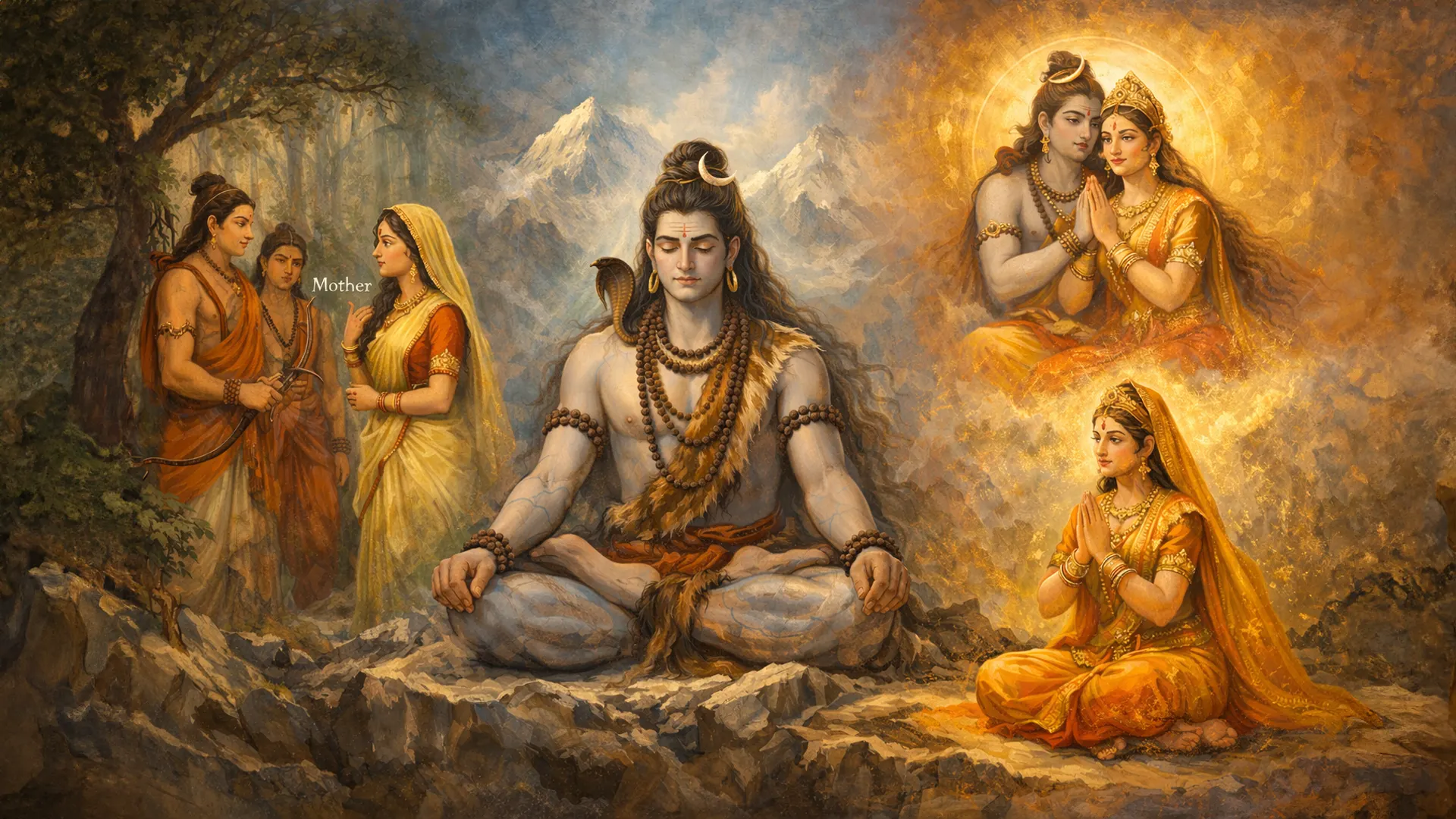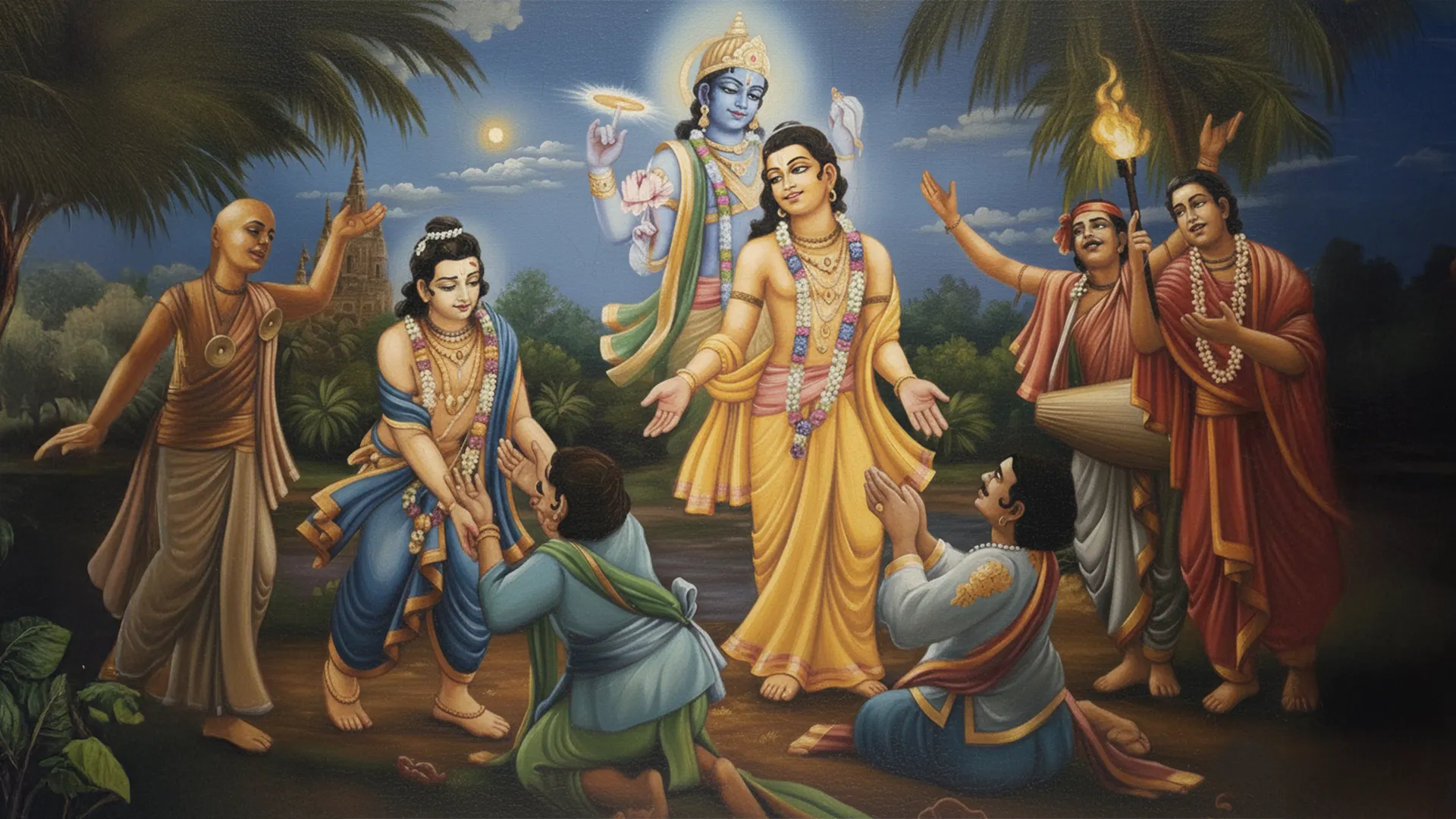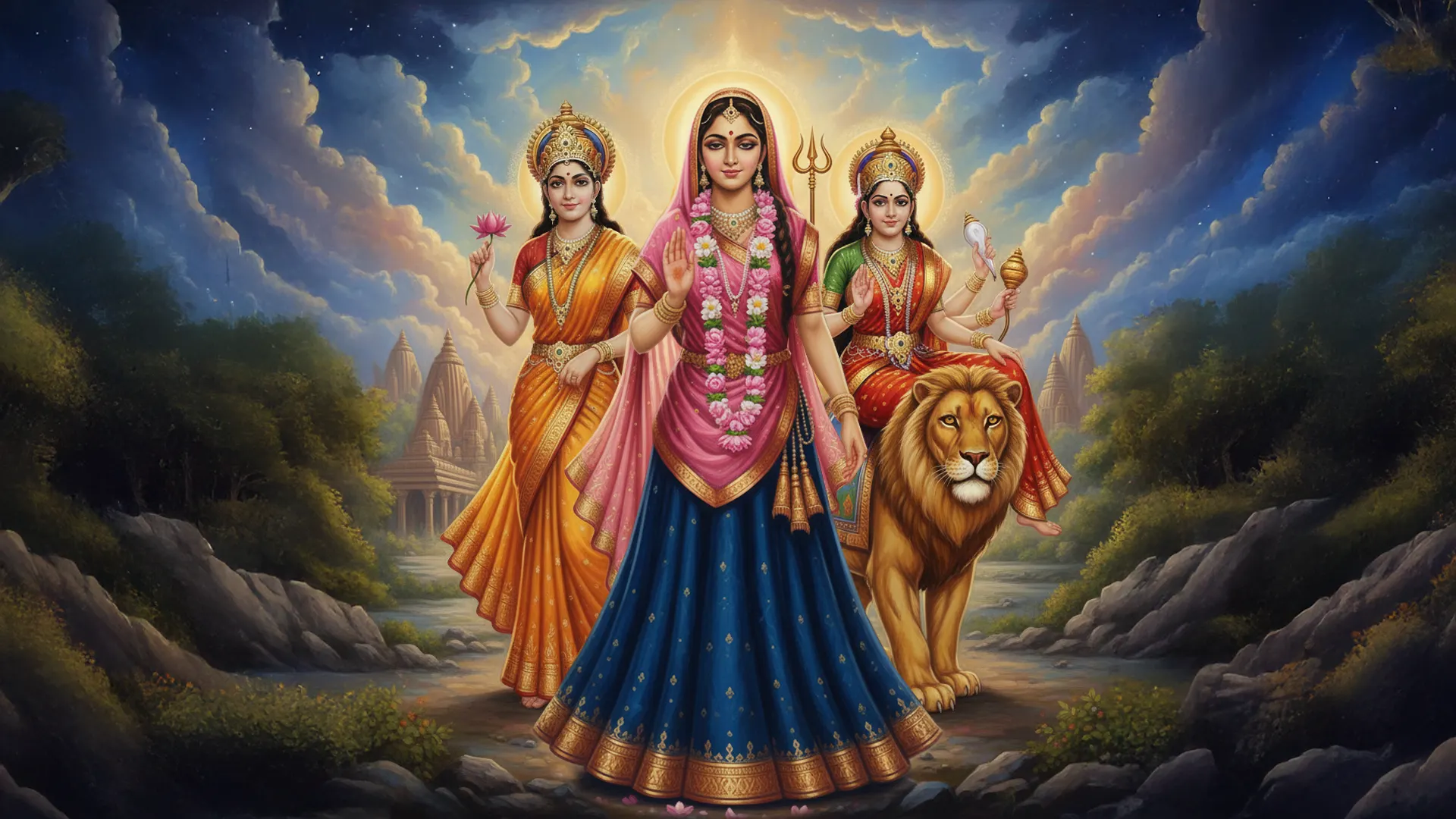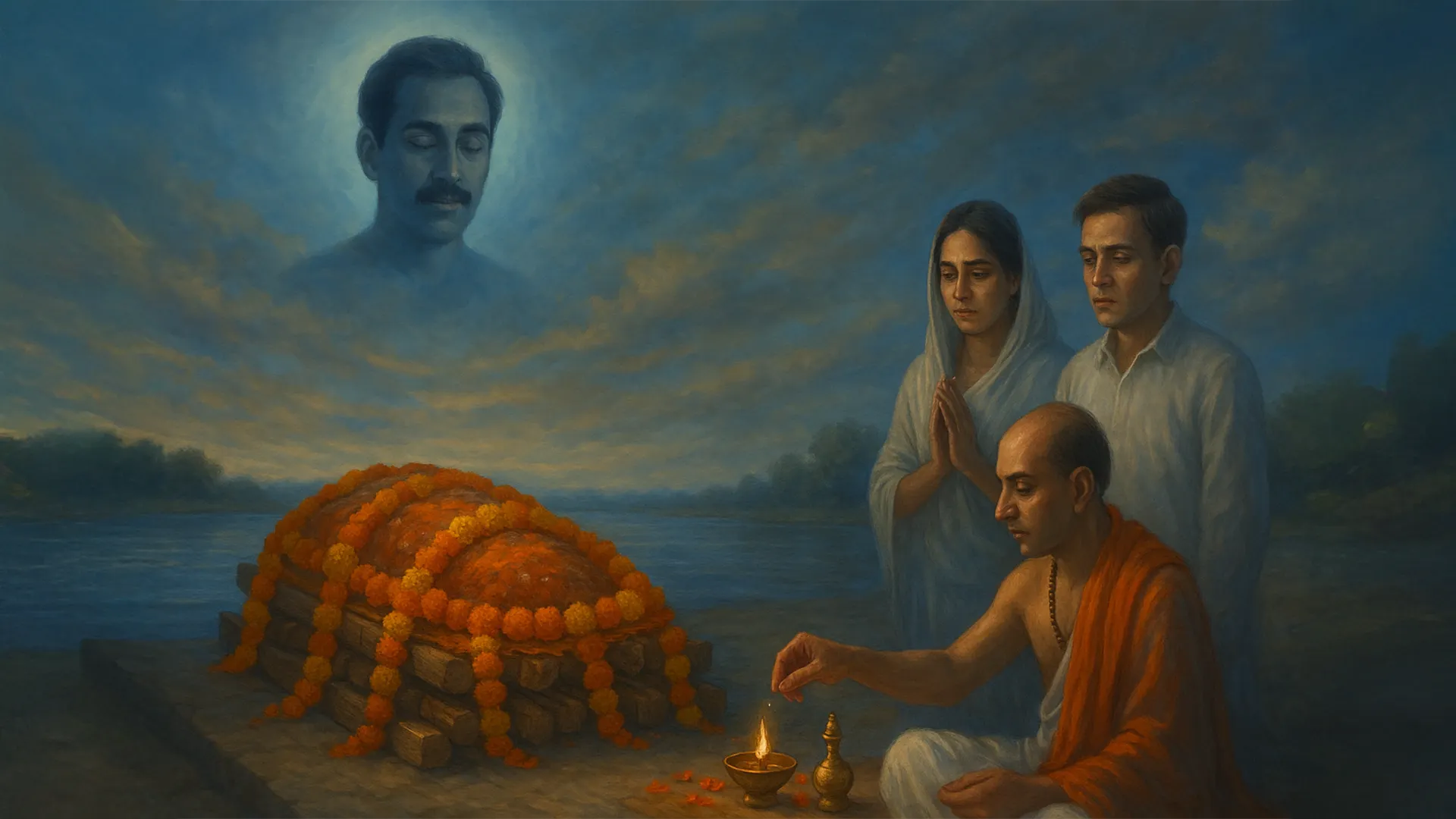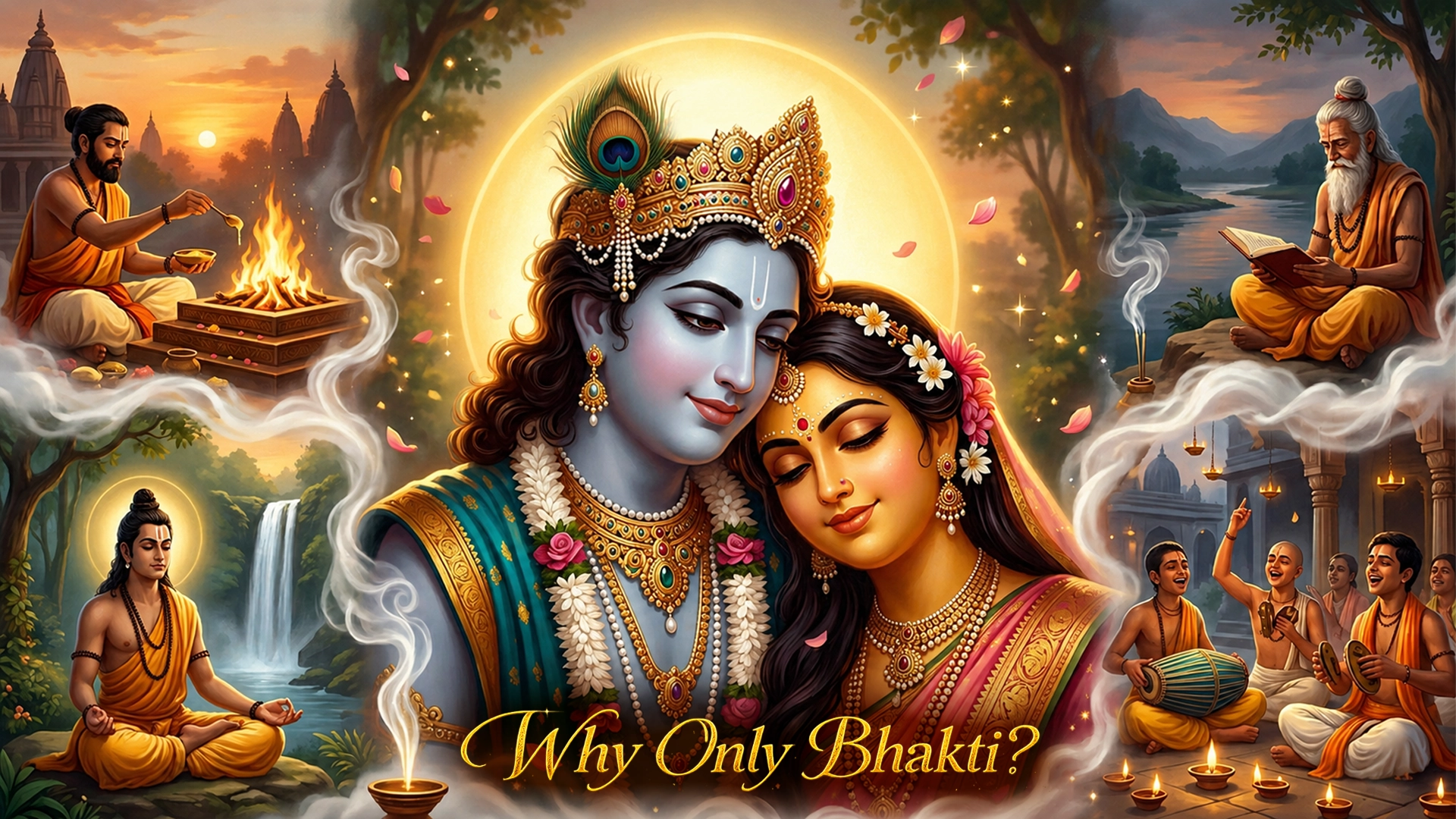
The Vedic scriptures describe several spiritual paths, yet they do not speak of them as equal in their results. While Karm, Gyan, and Ashtang Yog each play an important role in the seeker's journey, the saints consistently glorify Bhakti as the highest path.
Why is Bhakti given such a special place? What does Bhakti offer that the other paths cannot? Drawing from the Scriptural commentaries by Swami Mukundananda, this blog explores why Bhakti is considered the simplest, safest, and most complete path to God-realization.
Traditional Paths to God Realization
To establish Bhakti as supreme, first recognize how it distinctly stands apart from the other main spiritual paths.
- Karm: The Path of Action
Karm, or karm-kand, encompasses the ritualistic ceremonies outlined in the Vedas. These practices entail precise rules and complex procedures, making them especially challenging to perform in the current age.
Result: When performed correctly, karm-kand may grant material benefits and celestial abodes (swarg) after death, but it does not lead to direct God-realization. - Gyan: The Path of Knowledge
This path attracts deep thinkers. Its core question: “Who am I?” It involves studying texts, questioning, and using insight (vivek) to distinguish what’s eternal (the soul) from what’s temporary (the body and material world).
Result: The path of Gyan leads to the realization of God's formless (Brahman) aspect. - Ashtang Yog: The Path of Discipline
Rooted in Ashtanga Yoga, this path focuses on discipline, yogic postures, breath control, and detachment. The goal: a quiet mind and samadhi, deep meditative absorption.
Result: Ashtang Yog leads to the attainment of the Paramatma (Indwelling) aspect of God. - Bhakti: The Path of Loving Devotion
Bhakti entails nurturing pure, selfless love for God through devotion, remembrance, worship, and loving service. Unlike other paths that emphasize self-effort, Bhakti is rooted in a loving relationship with God—where love opens the heart, surrender dissolves the ego, and grace lifts the soul beyond its own limitations.
Result: Only Bhakti leads to the realization of God in His loving, personal form.
Why Bhakti Stands Supreme: Where Karm, Gyan, and Yog Fall Short
What makes Bhakti different from every other spiritual path?
The answer is surprisingly simple: Bhakti is centred on love. While Karm emphasizes action, Gyan emphasizes knowledge, and Yog emphasizes discipline, Bhakti focuses on developing a personal relationship with God. This shift changes everything. Devotion engages the heart, invites Divine Grace, and allows the soul to experience God in His fullest and most loving form.
As we will see, these unique qualities make Bhakti not only the easiest path to practice, but also the most complete path to God-realization.
Bhakti Begins with What We Already Know: Love
What is the one thing every human being possesses, regardless of age, education, or social status?
It is our ability to love.
From childhood, we learn to love our family, friends, possessions, ambitions, and countless other things. Bhakti does not ask us to develop a new faculty. It simply redirects this natural tendency toward its highest object- God.
This makes Bhakti the most practical and attainable path. Our innate ability to love is enough; Bhakti simply demands we direct it toward the Divine. Through remembrance, prayer, and devotion, this love becomes a deep personal connection with God.
Bhakti Is Open to Everyone
Can everyone become a philosopher? Can everyone master difficult yogic disciplines or perform elaborate Vedic rituals?
Not easily.
Karm demands exacting rituals and scriptural precision. Gyan requires significant intellectual discipline. Ashtang Yog insists on rigorous control over mind and body. In sharp contrast, Bhakti welcomes all, regardless of background or capability.
Bhakti erects no barriers- anyone can genuinely follow this path.
A child can practice it. A scholar can practice it. A busy professional, a homemaker, or a renunciant can all follow this path. Regardless of background or ability, anyone can remember God, chant His names, serve Him with devotion, and make spiritual progress.
Bhakti Draws Its Power from Love, Surrender, and Grace
What makes Bhakti so powerful compared to other spiritual paths?
Its strength lies in three simple yet sublime principles: Love, Surrender, and Divine Grace. Love turns spiritual practice from a routine into a relationship. Surrender frees the seeker from the burden of “I can do it all myself” and opens the heart to God’s guidance and protection.
The scripture Nyaya Darshan explains this beautifully through the analogy of the monkey baby and the kitten. A baby monkey must cling tightly to its mother as she leaps from branch to branch; if it loses its grip, it falls. A kitten, however, is carried safely by its mother, who gently lifts it and takes it where it needs to go. Bhakti is like the path of the kitten: the devotee strives sincerely, but ultimately relies on God’s grace to carry the soul beyond its own limitations.
This fundamentally distinguishes Bhakti: while the devotee must make an effort, they never walk alone. Every step is supported by a greater power, making the journey decisively more effective, joyful, and reassuring.
Bhakti Leads to a Personal Relationship with God
Is God merely an impersonal force to be understood, or a loving reality to be experienced?
For a devotee, without ambiguity, God is not just to be realized, but is to be loved above all.
While other paths may only reveal God's greatness or omnipresence, Bhakti alone reveals His personality and sweetness. Through devotion, the soul definitively forms an eternal relationship with the Divine.
The scriptures describe five devotional sentiments through which this relationship may unfold:
- Shant - peaceful reverence
- Dasya - loving service
- Sakhya - intimate friendship
- Vatsalya - parental affection
- Madhurya - divine love for God as one's Beloved
In Bhakti, God becomes the soul's closest companion- never merely a remote concept.
Bhakti Is Both the Path and the Destination
Most spiritual disciplines are like ladders. Once the top is reached, the ladder is no longer needed.
Bhakti stands completely apart from the other paths. The devotee practices love to attain God and, upon attainment, continues loving and serving Him eternally. Here, means and end are absolutely one and the same.
Narada Bhakti Sutra 27
phala-rūpatvāt
‘Because Bhakti is itself the fruit (goal).’
In his commentary on this verse, Swami Mukundananda explains that Bhakti is not merely a path leading to something higher; Bhakti itself is the highest attainment. The devotee does not practice devotion to abandon it later. Love for God is both the process and the perfection.
Pitfalls of Karm, Gyan, and Ashtang Yog: Where Bhakti Provides Safety Nets
The superiority of Bhakti becomes most evident when we examine the challenges inherent in the other spiritual paths. Karm, Gyan, and Yog, each carries certain limitations that can slow down the progress or even become obstacles to God-realization. Let us examine some of these pitfalls and see how Bhakti provides the missing element that helps the soul reach its ultimate destination.
Can Spiritual Progress Become a Trap?
Most of us think pride comes from wealth, status, or power. Yet Swami Mukundananda warns of an even more dangerous form—spiritual pride.
Ironically, the very practices intended to bring us closer to God can become a source of pride. This is dangerous because ego is the last and most formidable barrier to God-realization.
A person engaged in karm may develop pride of doership. A scholar may secretly feel superior because of their scriptural knowledge. A yogi may take pride in extraordinary discipline or mystical accomplishments.
In each case, the focus quietly shifts from God to oneself. This story from Shrimad Bhagavatam beautifully illustrates this principle.
Uddhava(the foremost Gyani) was among Krishna's most learned devotees and was sent to console the Gopis with philosophical wisdom. Instead, he encountered a devotion so deep that he felt humbled before simple village women who possessed no scholarly learning. Their love for Krishna surpassed his intellectual understanding. Uddhava ultimately prayed to be born as a blade of grass in Vrindavan so that he might receive the dust of their feet.
Bhakti is the definitive safeguard. The devotee regards every talent, achievement, and opportunity as God's gift. With all credit going to Him, pride has no foothold.
Can the Mind Ever Truly Be Controlled?
Anyone who has tried to meditate knows the challenge. The moment we attempt to focus, the mind wanders—into memories, worries, plans, and distractions.
This struggle is not unique to modern seekers. Even Arjuna confessed to Lord Krishna:
Bhagavad Gita 6.34
chañchalaṁ hi manaḥ kṛiṣhṇa pramāthi balavad dṛiḍham
tasyāhaṁ nigrahaṁ manye vāyor iva su-duṣhkaram
‘The mind is very restless, turbulent, strong, and obstinate, O Krishna. It appears to me that it is more difficult to control than the wind.’
The story of Vishvamitra from the scriptures illustrates this challenge vividly. Despite attaining extraordinary yogic powers through severe austerities, he remained vulnerable to anger, pride, and temptation. His life demonstrates how difficult it is to conquer the mind through willpower alone.
Bhakti provides the only truly effective approach: rather than battling the mind, it redirects the mind's attachments. Absorbed in God's names, forms, and pastimes, concentration flows naturally through love, not force.
Why Karm, Gyan, and Yog Cannot Reach the Final Goal on Their Own?
Karm may bring material rewards and heavenly pleasures, Gyan can dispel ignorance, and Yog can discipline the mind. Yet none of them, by their own strength, can bridge the gap between the tiny soul and the Infinite God.
The final revelation of God depends upon Divine Grace. Bhakti is unique because it attracts that grace through love, surrender, and devotion, enabling the seeker to attain what self-effort alone cannot.
Lord Krishna declares in Bhagavad Gita (18.55)
bhaktyā mām abhijānāti yāvān yaśh chāsmi tattvataḥ
tato māṁ tattvato jñātvā viśhate tad-anantaram
‘By devotion alone can I be known as I truly am. Then, having known Me in truth, the devotee enters into union with Me.’
Hence, Bhakti is not just another option. It alone completes every path by drawing the grace necessary to truly know God.
If All Paths Lead to God, Do They All Reveal Him Equally?
Swami Mukundananda answers this question with a beautiful analogy. Visualize standing beside a railway track at night. In the distance, you notice a tiny light. As it approaches, the light grows brighter. Finally, when the train arrives at the station, you can see the engine, compartments, passengers, and all its details.
The train was always the same. Only your proximity changed.
Similarly, seekers on the path of Gyan may realize Brahman, God's all-pervading, formless aspect. Through Yog, one may perceive Paramatma, the Divine residing within all beings. Both are authentic realizations, but they are partial.
Ishopanishad verse 15
hiraṇmayena pātreṇa satyasyāpihitaṁ mukham
tat tvaṁ pūṣann apāvṛṇu satya-dharmāya dṛṣṭaye
O Absolute Truth, Who are the Nourisher of devotional rasas! Your divine face is covered by a golden effulgence. Desirous of following real dharma (which is devotion to You), I pray that You remove the veil of radiance that covers Your Personality, so that I may behold the vision of Your divine form.
Bhakti brings the soul closest to the Divine and reveals Bhagavan—God in His complete, personal, and infinitely loving form. It is this intimate realization that makes the bliss of Bhakti incomparable to every other spiritual attainment.
Conclusion
What, then, is the true power of Bhakti?
While every spiritual path offers spiritual growth, Bhakti alone culminates in an eternal relationship with God. It allows the soul not simply to know about God, but to know Him personally, love Him deeply, and experience His grace directly.
When the heart embraces devotion, spiritual practice ceases to feel like an obligation and becomes a celebration. God is no longer a remote concept but a living presence, guiding, uplifting, and reciprocating with the devotee's love.
This is why saints and scriptures repeatedly glorify Bhakti as the highest path.
Bhakti does not merely lead the soul to God—it culminates in the soul's ultimate goal: an eternal loving relationship with the Divine.
Continue Your Journey
The ideas explored in this article are inspired by the teachings of Swami Mukundananda. To delve deeper into Bhakti Yog and the Vedic understanding of God-realization, consider exploring: